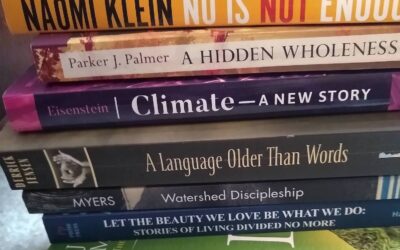
We asked QEW members to share their favorite books. Happy reading! Books to Read for These Times: Climate: A New Story by Charles Eisenstein. “How changing the ‘climate’ of our thinking and rhetoric can influence how we deal with physical climate change.” The Parable...
EQAT AT 10: Finding Resilience in an Unimaginable Year
By Lee McClenon. In the last few decades, some social scientists studying organizations have recognized that organizations are healthiest when they embrace a bit of unpredictability. In this model, networks are more powerful than individuals. Resilience is more...
Examining Institutional Racism
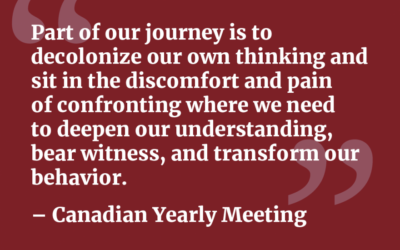
By Lauri Langham. The intersection between environmental justice and racial justice is a busy one. We recognize how Black, Indigenous, people of color (BIPOC) and low-income people are the frontline communities that suffer the first and worst effects of planet...
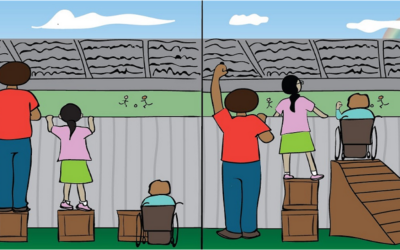
Equality -> Equity -> Justice: The Transportation Case Example
By Beverly Ward “Our equality testimony flows inevitably from our belief that there is that of God in every person. If we believe in Equality, we must work for Justice. British Friends remind us: ‘Are you alert to the practices throughout the world which discriminates...
Pleasing the Divine with Evolutionary Love
By Jose Aguto History is littered with the graceless exits of despots clinging to the chimera of the temptation of secular power for personal glorification above the good of others. We know this from the Gospels as one of the three temptations the devil offered to...
Build Back Fossil Free
By Hayley Hathaway and Ruth Darlington. “If we’re going to Build Back Better, we need to do better. And that starts by putting Indigenous people and their voices first, before any [fossil fuels] project is put in place…It is our Indigenous right to protect what...
Collective Evolution in the Face of Climate Crisis
By Keith Runyan. FROM THE EMERGENT PATTERNS of a monarch butterfly’s wing to the fractal branchings of a mycelial web, we find ourselves, as 21st-century Friends awash in a fundamentally beautiful world, unveiled. We find ourselves not in the universe, but of it, in a...
Philadelphia Friends Confront Climate Crisis
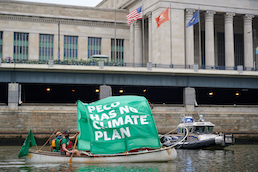
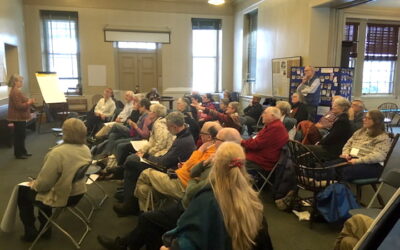
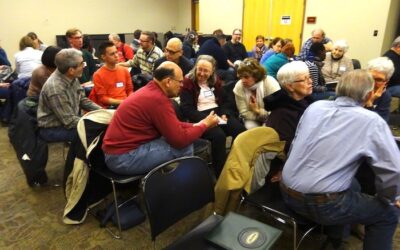
By Patricia Finley, Ruth Darlington, Liz Robinson, and the Eco-Justice Collaborative of PYM. MORE THAN 50 FRIENDS gathered on a snowy morning at Germantown Monthly Meeting on January 18 to learn, share, and discern how to effectively address environmental injustice...
Book Review: Nothing Lowly in the Universe: An Integral Approach to the Ecological Crisis by Jennie M. Ratcliffe
By Ruah Swennerfelt. MANY, MANY YEARS ago, after having a deep-felt conversation with my father, who wanted to blindly trust his government, I gave him Cadillac Desert by Marc Reisner. I chose that book because Dad lived in Southern California, a desert turned into a...
Poems: “The Earth is Us” and “gifts”
By Mary Ann Iyer. The cells of this earth are our cells. The wind that blows across its surface is the self same air that we breathe. Our life blood courses through our veins with no less certainty than the rivers cascading to the sea. And what are we to make of this?...
Roadmaps to a Better Future: Analyzing Climate Change Solutions Without Geoengineering
By Judy Lumb. HOW DO WE ensure a future on Earth for humans and other creatures? Three recent reports analyze solutions to climate change that meet the ambition of the Paris Agreement. The Climate Urgency: Setting Sail for a New Paradigm Coopération Internationale...
Is (the) Paris (Agreement) Burning?
By Shelley Tanenbaum. THE MOST RECENT Conference of the Parties (COP), held in Madrid, Spain in December, appeared to balance the Paris Climate Agreement of 2015 on a knife’s edge, a sharpened knife’s edge. Lindsey Cook of Quaker United Nations Office (QUNO) referred...
Interfaith Earthcare Touchstones
Compiled by Beverly G. Ward. “A touchstone transcends any one religion, thought, or spiritual tradition and serves as a guide. These touchstones provide examples of specific prayers, passages or scripture, or inspirations from various sacred texts or philosophical...
Considering Limits to Human Population Size
Friends have long been concerned about how we live on our Earth and how we can best support a good life for everyone and all species. Sustainability requires that we use Earth’s resources at a level that provides a reasonable life for all now and maintains the...
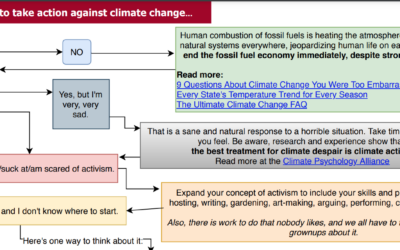
So You’re Ready to Take Action Against Climate Change
Josephine Ferorelli created this flow chart—a helpful resource for anyone who doesn’t know where to start. Josephine is the co-founder and co-director of Conceivable Future, a women-led network bringing awareness to the threat climate change poses to reproductive...
The Changing Context of United Nations Climate Negotiations
By Philip Emmi. It is increasingly clear that we have gotten off on the wrong foot when addressing climate change. It can not be primarily a matter of nation-state cooperation on international policy, as once thought. Rather, addressing climate change requires a...
The Bare Minimum: COP Climate Change Conference
By Lindsey Fielder Cook. THE AIM OF THE DECEMBER climate change conference in Poland, known as the Conference of Parties 24 (or COP24), was to define an implementation ‘Rulebook’ for the Paris Agreement. After two weeks of exhausting, if not ‘fierce’ negotiations,...
Pachamama Alliance Promotes Grassroots Drawdown Action
By Keith Voos. I’M SURE THAT MOST readers of this newsletter hold it to be true that the human race now faces the biggest threat to its survival since its near extinction in the last ice age, when the population of the earth was reduced to between 15,000 and 18,...
Project Drawdown In Practice
By Ruth Darlington. WHEN PAUL HAWKEN’S book Drawdown: The Most Comprehensive Plan Ever Proposed to Reverse Global Warming came out in 2017, many hailed it as the “new Green Bible.” I rushed to get a copy. When I held it in my hands, it felt like proof that there...
Let Nature Teach
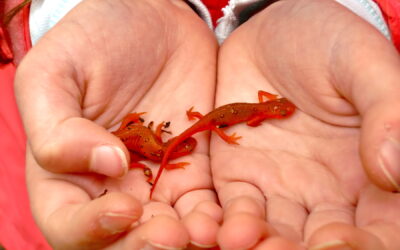
By Dan Kriesberg. AN EXCELLENT MEASURE of how much children are learning is to count the number of times the teacher says “Pay attention.” The fewer “pay attentions” the more learning. In my own experience of 30 years as a science teacher, a 4th-grade teacher, and...